
Coming in 2027
New energy-efficiency standards for Victorian rentals
Victoria is adding energy-efficiency requirements to the rental minimum standards, phased in from 2027. If you plan for them now, you can do the work on your own timetable instead of between tenancies.
Some obligations already apply. Your property must meet the current minimum standards before you advertise it, and since 13 October 2026 you must keep records that prove it. See what applies now →
What changes, and when
The new standards are triggered at different points. A trigger is usually a new rental agreement, a conversion to a periodic (month-to-month) agreement, or an existing system failing beyond repair. Exemptions apply to some properties.
| From | Standard | Triggered by |
|---|---|---|
| 1 March 2027 | Fixed, energy-efficient cooling in the main living area, where there is no fixed cooling | New agreement or conversion to periodic |
| 1 March 2027 | Replacement of existing fixed cooling with an efficient system serving the main living area (ducted evaporative can be replaced like for like, as long as it has an outlet in the main living area) | When the existing system fails beyond repair |
| 1 March 2027 | Showerheads at least 4-star WELS (3-star where a 4-star head can’t be installed or work effectively) | New agreement or conversion to periodic |
| 1 March 2027 | R5 ceiling insulation, installed by a qualified installer, in uninsulated areas, including gaps in partially insulated ceilings | New agreement or conversion to periodic |
| 1 March 2027 | Efficient electric replacement for fixed heating | When the existing fixed heater fails beyond repair |
| 1 March 2027 | Efficient replacement hot water: a heat pump or electric-boosted solar system | When the existing hot water system fails beyond repair |
| 1 July 2027 | Draughtproofing of external doors, windows and unsealed wall vents | New agreement or conversion to periodic |
| 1 July 2030 | Efficient cooling in the main living area | Applies regardless of lease status |
Cooling: a working fixed cooling unit installed before 1 March 2027 may qualify for an exemption. See Consumer Affairs Victoria exemptions.
Before the work: ceiling insulation needs a pre-installation electrical safety check, any electrical issues found must be fixed first, and installation must happen within 30 days of the check. Where the property has gas appliances, fixtures or fittings, draughtproofing needs a gas safety check that is less than six months old when the work is completed (a requirement since 13 October 2026), and must not go ahead if the check finds unflued or open-flued gas appliances. A flueless gas cooktop without a rangehood is an exemption from the draughtproofing requirement. Arrange these with licensed trades. They are not part of our report.
This is a summary. Details, exemptions and dates can change. Always check the current position with Consumer Affairs Victoria before you rely on it.
How our report helps
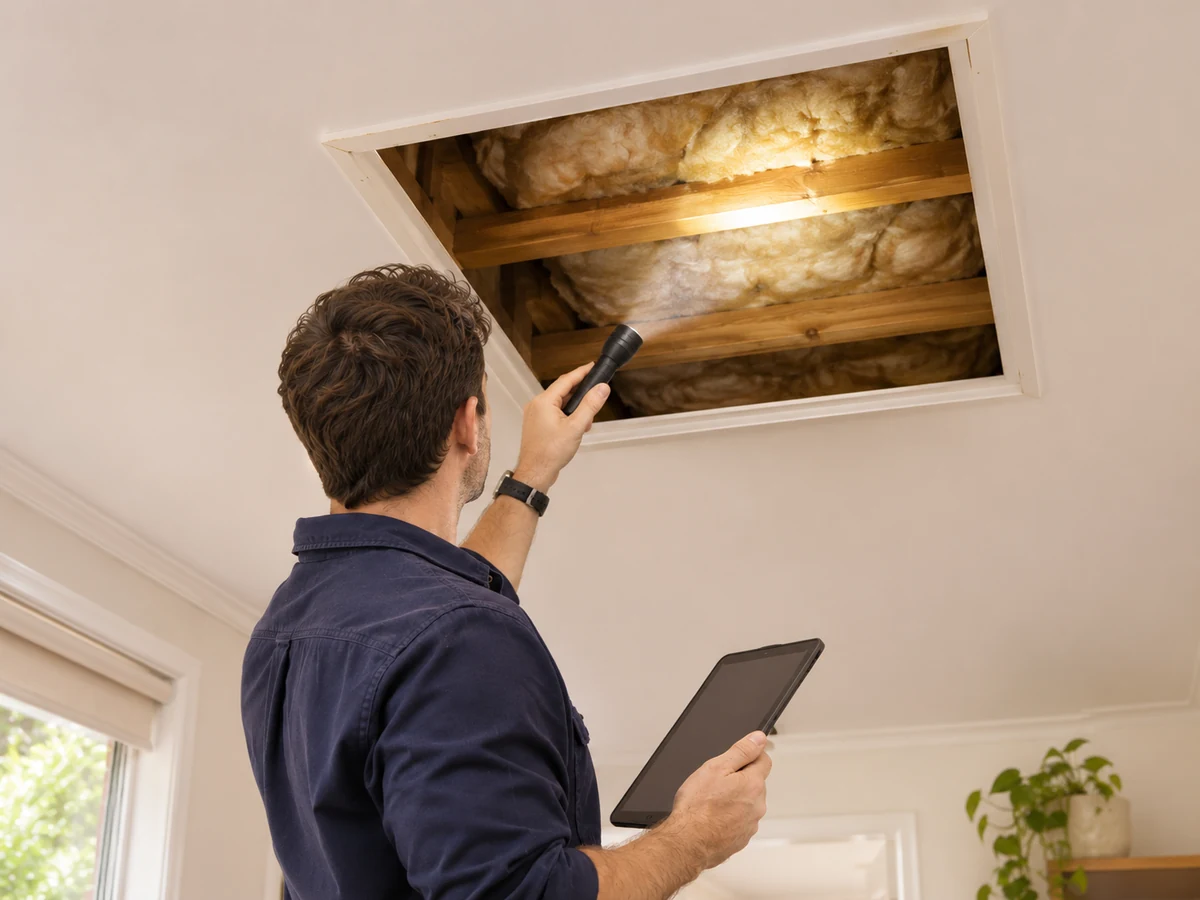
Every Keyline report includes a 2027 readiness section. It records what is visible and accessible on the day:
- Whether ceiling insulation appears to be present (where the roof space can be safely viewed)
- Heating, cooling and hot water types, with any visible efficiency labels
- Showerhead type and any visible WELS rating
- Obvious draughts around doors, windows, exhaust fans and fireplaces
This is a visual readiness check, not an energy rating or a compliance certificate for standards that haven't started yet. It gives you a practical list to budget for.
Get ahead of 2027
Book a minimum standards report and get a 2027 readiness snapshot in the same visit.